
Four apostles. Five addresses. Eighteen years. One image, carried on purpose — and the hand they named first.
Trowel & Musket · The Path · American Covenant Project By Rod Meldrum and Ken Krogue
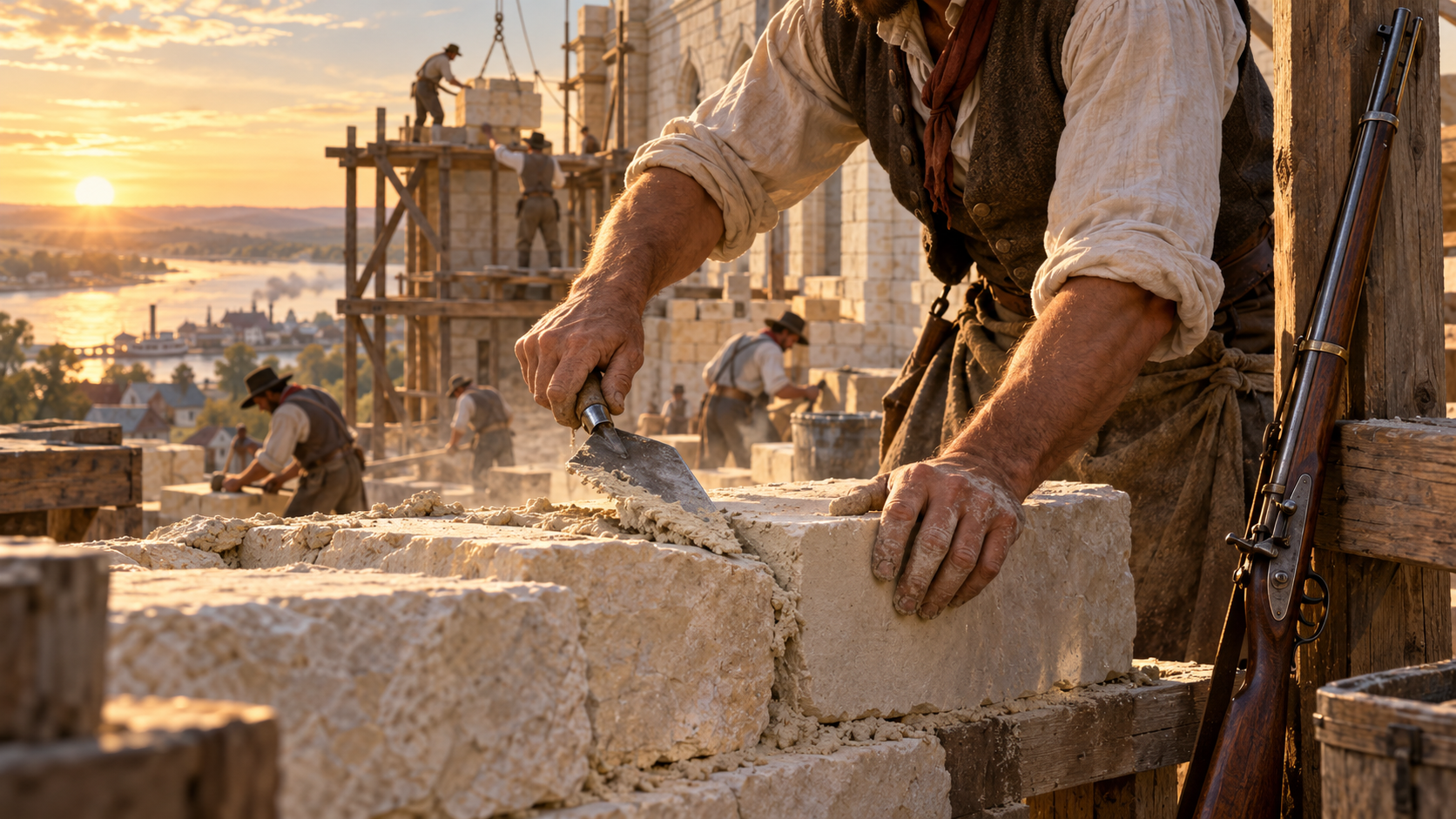
The men who built the Nauvoo Temple kept a weapon within reach.
That is not a figure somebody made up for a newsletter. It is how an apostle described the work of Latter-day Saint scholarship. And the image did not start with him.
It starts in Nehemiah.
Jerusalem’s walls were rubble. The people who came home from exile went out to rebuild them, and the men around them meant to stop it. So Nehemiah gave an order that has never needed updating: every man built with one hand and held a weapon with the other.
Building and defending. Same man. Same hour. No shift change.
Read what that describes and not what it sounds like. It isn’t a battle scene. It’s a construction site under pressure. Nobody on that wall wanted a fight. They wanted to finish the wall, and someone wouldn’t let them.
That is the oldest description of what this publication is for.
1. Elder Maxwell names it, and names the trowel first
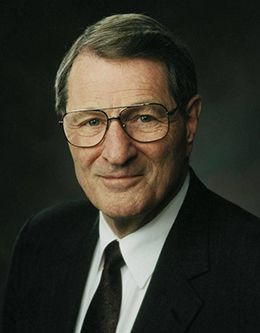
March 19, 2004. Elder Neal A. Maxwell, speaking to the BYU President’s Leadership Council in remarks titled Blending Research and Revelation.
He said Latter-day Saint scholars stood a little like the men who built the temple in Nauvoo, with a trowel in one hand and a musket in the other. Scholars building a temple of learning, he said, must sometimes pause to defend the kingdom.
Then the line that carries the whole thing: “the dual role of builder and defender is unique and ongoing.”
Read the last word again. Not a season. Not an emergency. Ongoing.
Elder Maxwell died four months later. This is among the last things he gave that institution.
And look at what he called the talk. Blending research and revelation. Not choosing between them. The man who handed the Church the musket named the assignment in the title.
2. Elder Oaks carries it, twice, and asks for more
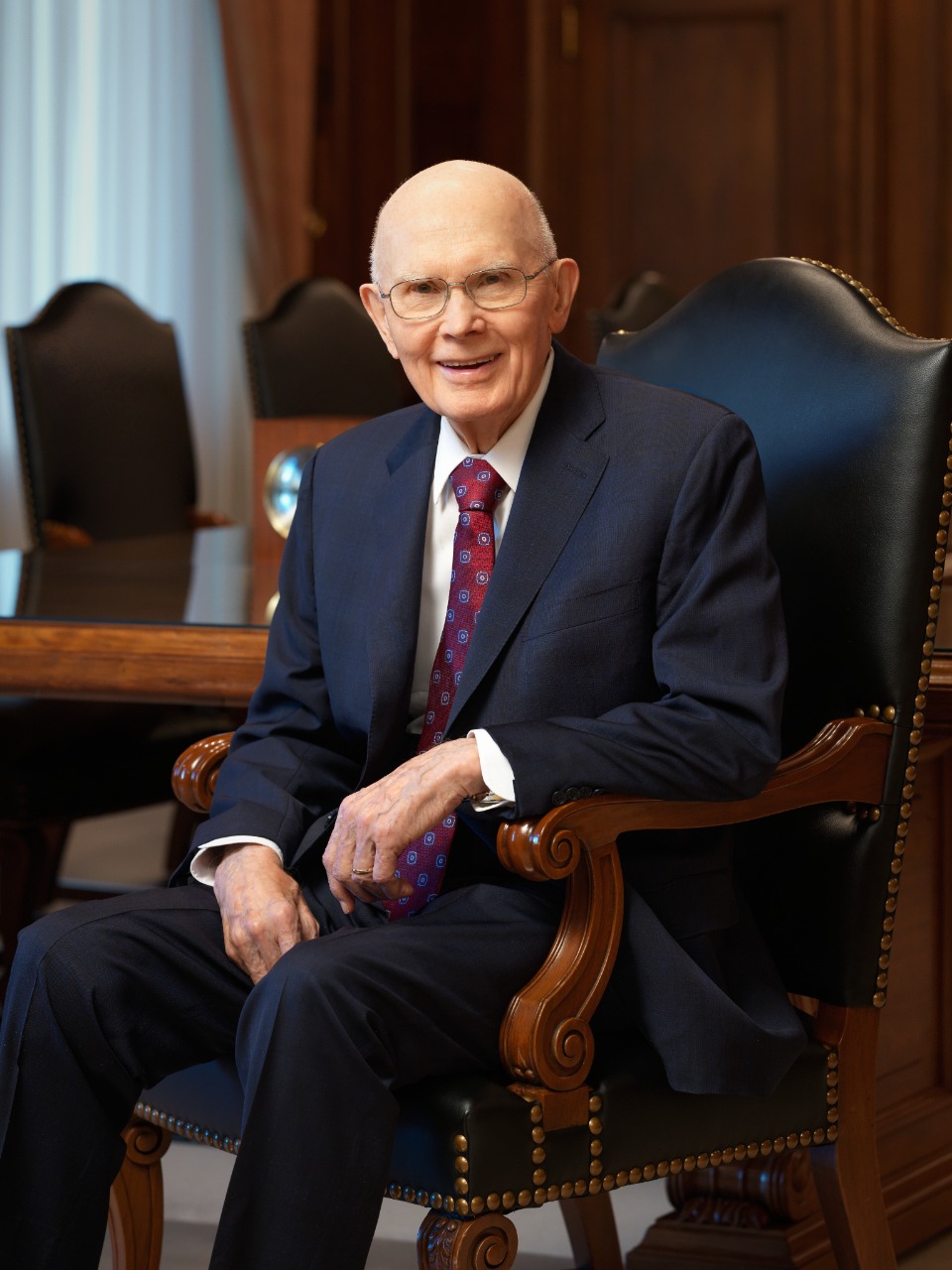
August 25, 2014. Elder Oaks addressed the BYU leadership conference under a title that is its own thesis: It Hasn’t Been Easy and It Won’t Get Easier.
No hedge. No promise the weather improves. That is a discouraging sentence or a liberating one, depending entirely on whether you were hoping to be rescued from the work.
He quoted Elder Maxwell’s trowel-and-musket passage there.
April 21, 2017. Same body, three years later: Challenges to the Mission of Brigham Young University. He quoted Elder Maxwell again, and asked for more from the defending hand. He would like to hear “a little more musket fire from this temple of learning.”
Not a little less. More.
He carried the image deliberately, to the same leadership, across three years. That was not an offhand line that happened to catch.
3. Elder Holland fixes the aim

August 23, 2021. At the BYU Annual University Conference, Elder Jeffrey R. Holland endorsed the metaphor again and said the need to define, document, and defend the faith would continue as long as the opposition did.
Then he did the thing that makes the name usable.
“Friendly fire is a tragedy.”
He named the casualties in both directions, which is the part almost everyone skips. Fire that had traveled toward the Church and its leaders. And fire that had wounded students and the parents of students, sitting in the pews, confused about what they were watching.
Some defenders, he said, had fired their muskets, all right, but a few rounds had landed north of the Point of the Mountain. Provo sits south of that ridge. Salt Lake sits north of it. The stray rounds were not going out toward anybody hostile. They were going back up the road, toward the command that had handed out the muskets.
That is what makes friendly fire a structural failure and not just a sad one. It isn’t poor aim. It is a defender turning around.
He did not say fire less. He said aim right.
4. Elder Christofferson fixes the temper
One year later, the annual conference met again.
August 22, 2022. Elder D. Todd Christofferson, The Aims of a BYU Education.
He never said the word musket. He didn’t need to. He spoke to what a defender becomes while defending. He warned that the temptation to apply hateful labels is almost overwhelming. He said we can love our enemies even as we oppose them, because every one of them holds the first and highest identity, child of God. He described a habit of perpetual grievance in which no wrong is ever redeemed and no injury ever forgiven, and said plainly that if God worked that way there would be no Atonement and no Savior.
Then the sentence that finishes Elder Holland’s:
“When and if we must contend, it will be without anger.”
And he asked one thing more, the hardest one: civic charity. Christlike love aimed on purpose at people outside the household of faith.
Two apostles. Two consecutive Augusts. One instruction. Aim right, and contend without anger.
The backbone: conflict is not contention
Now the part that keeps all of this from collapsing into either cowardice or cruelty.
Two verses do exactly what the two apostles did.
Doctrine and Covenants 18:20: contend against no church, save it be the church of the devil.
Read what that verse does not say. It does not say do not contend. It hands you the target. That is Elder Holland’s rule, given in 1829.
And now the part that has to be said out loud, because a careless reader will get it exactly backwards. That verse is not a hunting license. It does not let us nominate a denomination, a congregation, a neighbor, or a political tribe and call it the church of the devil. Every person standing across from us is a child of God. The target is never a person and never a pew. The target is whatever opposes truth, agency, covenant, and Christ, including, on our worst days, the thing operating inside us.
That does not water down the musket. It aims it.
3 Nephi 11:29: whoever has the spirit of contention is not His, but of the devil, the father of contention, who stirs up the hearts of men to contend with anger, one with another.
Read what that one does not say either. What the verse names as the devil’s is the spirit, and the marker is the anger. That is Elder Christofferson’s rule, almost word for word.
Target and temper. Both fences were in the scriptures long before either address.
The two words people keep swapping
Conflict is a condition. Two things are opposed. Usually you don’t get a vote about whether you’re in one.
Contention is an appetite. It is the taste for the fight itself, the part that enjoys the swing.
You can stand in conflict your whole life and never touch contention. You can be swollen with contention and never once face a real enemy. The modern instinct is to dodge the first so we can feel innocent of the second. That is not the instruction. The instruction is to stay in the conflict and refuse the spirit.
Captain Moroni knew the difference
He spent his adult life at war, and the record says he did not delight in bloodshed. His people were taught never to give offense and never to raise the sword except in defense. Conflict, constantly. Contention, refused.
And then he did the other thing, which is why he belongs in this article and not just near it.
Moroni fired north of the Point of the Mountain.
He wrote to Pahoran, the chief judge, his own government, his own ally. Angry. Accusing him of sitting in comfort while men died in the field. Threatening to come against him.
He was wrong about every part of it. Pahoran had been driven out of Zarahemla by the king-men and was fighting for his life.
And Pahoran wrote back: “I am not angry, but do rejoice in the greatness of your heart.”
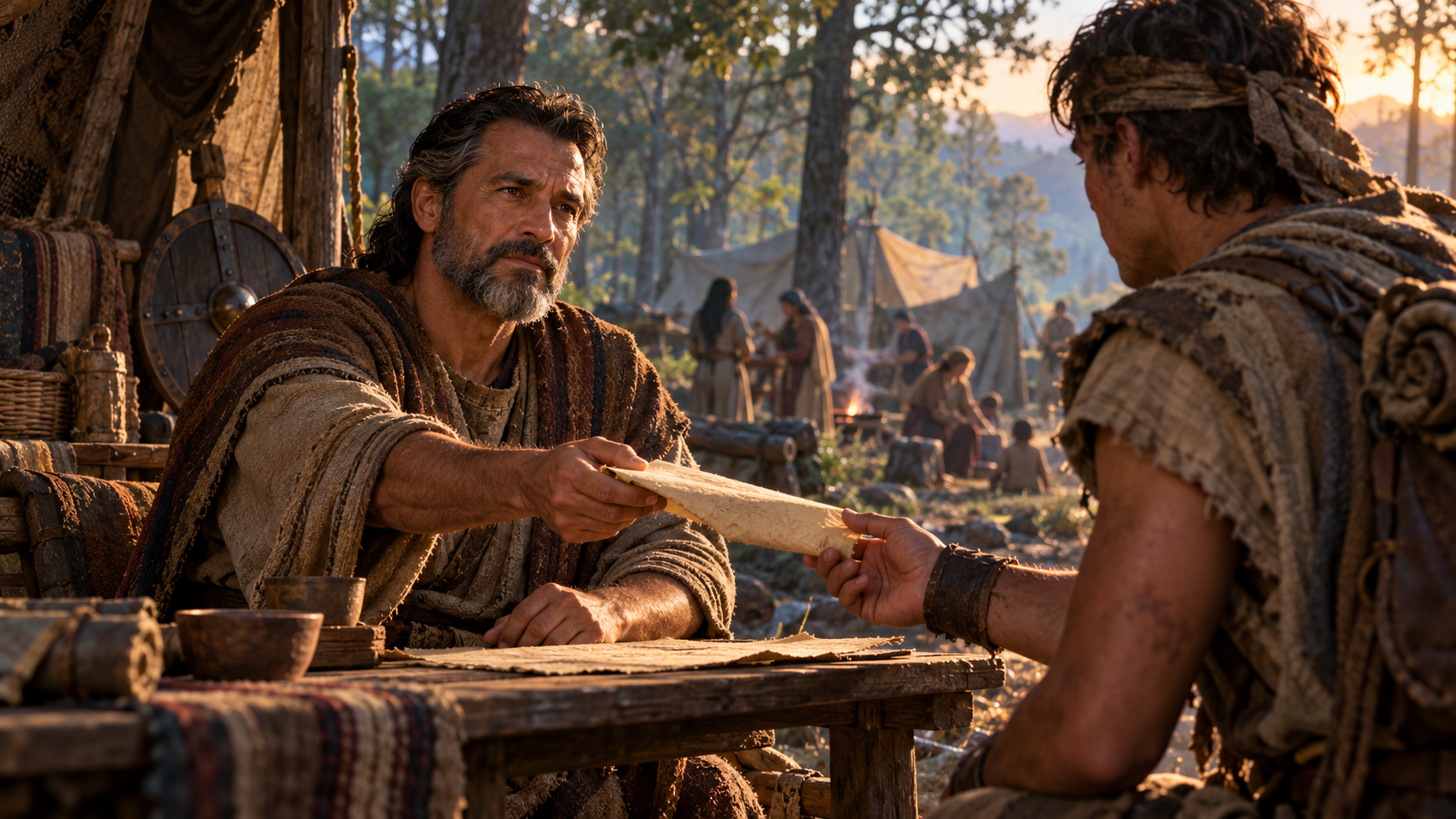
Friendly fire, from the greatest defender in the book, aimed at the one man who most deserved his trust. Absorbed without anger by the man who took the hit. Only then, after the correction landed and nobody escalated, did Moroni march to join him, and the two of them took the capital back together.
The march is what everyone remembers. The letter is what made the march possible.
Raise it in every room
Watch how Moroni marched. He did not send word ahead and wait. The record keeps one detail that matters more than the miles: he raised the standard of liberty in whatsoever place he did enter, and gathered whatever force he could at every stage.
Not once, at the start, for the history books. In every place he walked into.
This is our reading, not a claim about any map: that is the job of anyone who carries this standard. Not one launch and then silence. Every issue, every article, every room. Raise it where you stand, gather who will come, and keep walking.
They did not water it down
Elder Maxwell could have said advocate. Elder Oaks could have said speak up. Elder Holland could have quietly retired the metaphor when the room got hot, and no one would have made him answer for it.
Not one of them did.
They chose a weapon on purpose, kept choosing it across eighteen years, filled the hand, and walked into it. And in the same breath they told us where to point it and how to carry it. That is a commander handing out live rounds and rules of engagement at the same time, because he intends you to actually go.
Our muskets are articles. Footnotes. Primary sources. A number somebody can check. A correction published before anyone demands one. The weapon changed. The rules did not.
The hand that comes first
Read Elder Maxwell’s sentence one more time and watch the order.
A trowel in one hand and a musket in the other.
The trowel comes first. Not as decoration and not as a softener. First.
Nehemiah’s men were the same. They were builders who happened to be armed, not soldiers who happened to build. The wall was the work. The weapon existed so the work could keep going.
And that is why this publication is named Trowel & Musket. A publication named for a weapon and nothing else would eventually become one: all aim, all argument, all fire, and nothing rising.
The trowel is the reason there is a musket in the other hand at all.
Look at what those men were building. Nehemiah was rebuilding a city so families could live in it again. The Nauvoo builders were raising a temple where families would be sealed to each other forever. In neither case was the wall the point, and in neither case was the weapon. The point was the home inside.
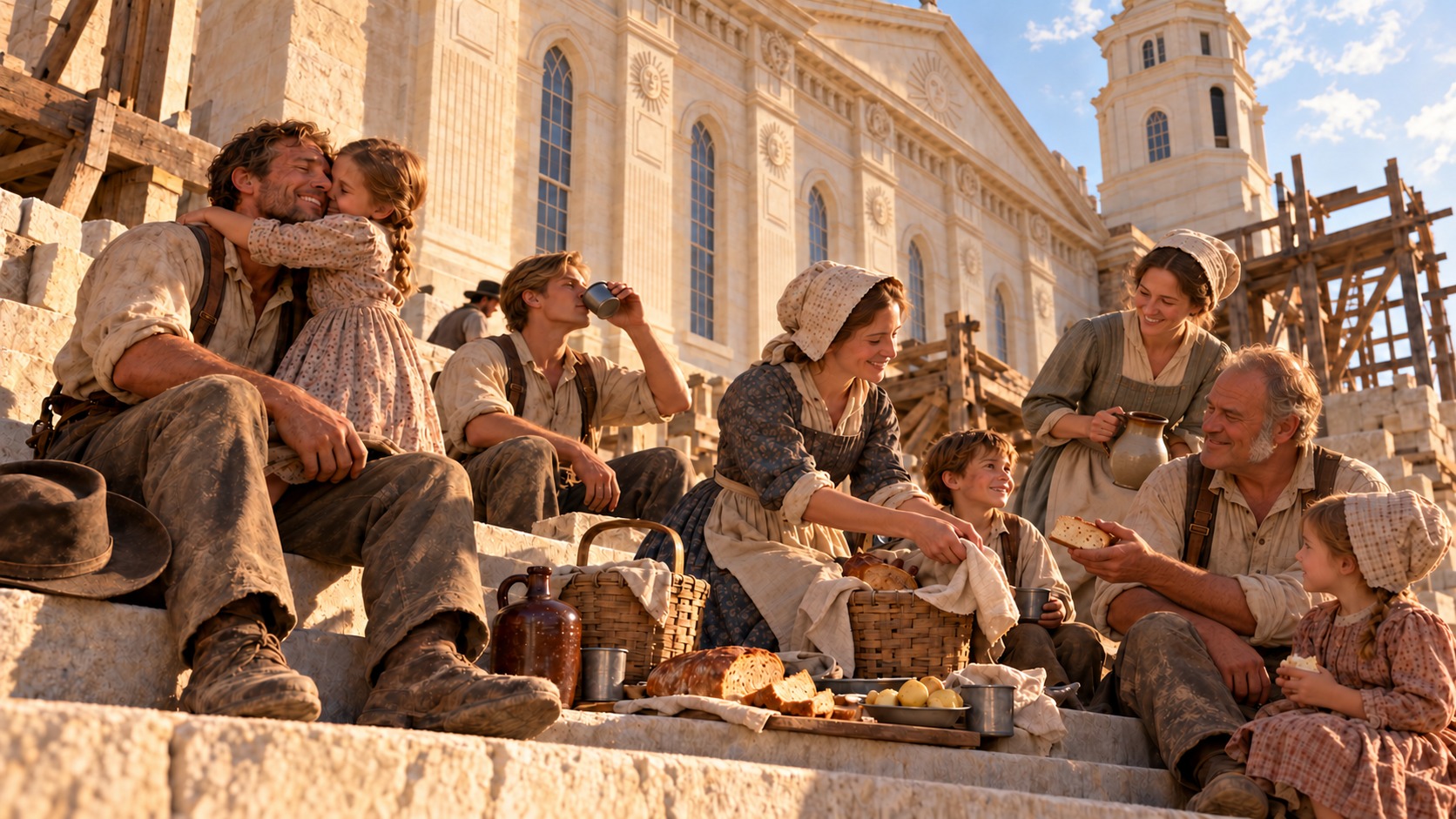
The defending hand gets the attention and writes the headlines. The building hand does most of the work and outlasts all of it. Which is why this newsletter will spend far more of its life on what is being built than on what is being defended. A wall with nothing behind it is just a wall, and we are not in the wall business.
Why we are building The Forge
Valley Forge was named for a real ironworks. Mount Joy Forge, built in 1742 by Quaker ironmasters where Valley Creek meets the Schuylkill, made tools, hardware, and munitions for the revolutionary cause.
The British burned it in September 1777, three months before the army arrived.
So when Washington’s men marched in that December, they camped beside a forge that no longer worked. Shoes and clothing were in short supply. Somewhere between seventeen hundred and two thousand died, of disease, not battle. There was no battle at Valley Forge.
And something got made there anyway. Von Steuben arrived in February and drilled them. By summer, the army had become a more disciplined fighting force.
The army became the thing the forge could no longer make.
That’s why we are developing The Forge as a home for our national and global covenant work. The Path remains our blog for personal covenant living. A blog is a place: you walk into it, and it’s where the work is kept. A newsletter is an instrument: it goes out, aimed, and reaches you at a distance. The Forge catches. Trowel & Musket carries.
Why we did not pick a gentler name
We publish in two lanes, and we named them differently on purpose.
The Covenant Project walks The Path and sends The Signal Fire. There is no weapon in either name, and that is deliberate. A path invites. A fire on a ridge tells somebody still walking in the dark, you are not alone, keep coming. Nothing in that lane requires you to be a Latter-day Saint to belong there. The door is unlocked and it stays unlocked.
The American Covenant Project is a different room, and it says so out loud.
This is a declared Latter-day Saint lane. We are not going to soften that at the door and then spring it on you in paragraph nine. We would rather tell you exactly what this is on the way in than be accused later of having hidden it.
And the day we put it down
The musket is provisional. Elder Holland ended by pointing at the day Isaiah saw, when the nations shall beat their swords into plowshares, and their spears into pruninghooks, and learn war no more.
Look at what those two things are. Farm tools.
The metal does not get thrown out. It gets re-forged for planting and pruning. The forge outlasts the musket. That is why the place is permanent and the instrument is temporary, and why we named them in that order.
Which leaves the aim itself, and it is not finally at anyone. It is toward Someone.
Every defense we mount, every document we bring, every claim we check is here to bring people to Christ, and Christ brings them to the Father. That is the direction of the whole thing. If a piece of writing in this newsletter ever wins its argument and leaves the reader no closer to the Father, it failed, however well it shot.
What you will get here
Every claim carries its receipts. When something is a fact, we show you the source. When it’s our reading, we say it’s our reading. When we don’t know, we say that instead of rounding it up.
When we get it wrong, you will read the correction from us first. And if a critic finds the error before we do, we will publish the correction and say their name.
Conduct, never persons. We take on arguments, evidence, and claims. Not people, and not a roster of names.
It hasn’t been easy. It won’t get easier. We are building anyway. That is the first hand, and it is the one that will do most of the work.
The other hand is for the wall.
Contend against the right thing. Contend without anger. And keep one hand on the trowel.
This is covenant land. Trowel & Musket brings the evidence.
— Rod Meldrum and Ken Krogue
Sources
The five addresses
| # | Speaker | Address | Date | Setting |
|---|---|---|---|---|
| 1 | Elder Neal A. Maxwell | Blending Research and Revelation | 19 Mar 2004 | BYU President’s Leadership Council |
| 2 | Elder Dallin H. Oaks | It Hasn’t Been Easy and It Won’t Get Easier | 25 Aug 2014 | BYU leadership conference |
| 3 | Elder Dallin H. Oaks | Challenges to the Mission of Brigham Young University | 21 Apr 2017 | BYU leadership conference |
| 4 | Elder Jeffrey R. Holland | The Second Half of the Second Century of BYU | 23 Aug 2021 | BYU Annual University Conference |
| 5 | Elder D. Todd Christofferson | The Aims of a BYU Education | 22 Aug 2022 | BYU Annual University Conference |
Addresses 1–4 are established by Elder Holland’s own footnote 12. President Oaks footnoted his two again in his February 10, 2026 BYU devotional, as President of the Church.
Scripture
| Reference | Use |
|---|---|
| Nehemiah 4:17 | Builders working one-handed with a weapon in the other |
| D&C 18:20 | The target rule |
| 3 Nephi 11:29 | The temper rule; contend with anger |
| Alma 48:11–16 | Moroni did not delight in bloodshed; the sword only in defense |
| Alma 60 | Moroni’s epistle censuring Pahoran |
| Alma 61:9 | Pahoran: I am not angry |
| Alma 62:4–5 | The standard raised in whatsoever place he entered |
| Isaiah 2:4 | Swords into plowshares |
Valley Forge history: National Park Service overview; Mount Joy Forge history; disease and deaths.